Kim Phụng, Author at HERO EDUCATION

Author Archives: Kim Phụng

CÁC NGUỒN LUYỆN VIẾT IELTS

nguồn luyện viết ielts

Viết IELTS là một trong những kỹ năng gây khó khăn giúp học viên, bài viết này HERO sẽ liệt kê cho các thí sinh các nguồn luyện viết IELTS phổ biến nhất.

Trước mắt chúng ta nên tìm hiểu các tiêu chí chấm điểm bài viết IELTS

Đối với bài viết IELTS, chấm điểm sẽ dựa trên 4 tiêu chí chính:

Task Achievement (hoàn thành nhiệm vụ):

  • Đây là khả năng của bạn để hiểu và thực hiện đúng yêu cầu của đề bài.
  • Bạn cần phải đáp ứng tất cả các yêu cầu được đưa ra trong đề bài một cách đầy đủ và chính xác.

Coherence and Cohesion (sự liên kết và sự nhất quán):

  • Điểm số của bạn trong tiêu chí này phản ánh khả năng của bạn để viết một bài luận có các ý tưởng rõ ràng, sắp xếp một cách logic và hợp lý.
  • Bạn cần phải biết cách liên kết các ý tưởng lại với nhau để tạo thành một bài viết suôn sẻ và dễ đọc.

Lexical Resource (Số từ vựng sử dụng):

  • Tiêu chí này đánh giá khả năng sử dụng từ vựng phong phú, đa dạng và chính xác trong bài viết.
  • Nếu bạn sử dụng từ vựng sai hoặc không thích hợp, điểm số của bạn sẽ bị giảm.

Grammatical Range and Accuracy (Phạm vi ngữ pháp và độ chính xác):

  • Việc sử dụng ngữ pháp phù hợp và chính xác trong bài viết là rất quan trọng để đạt được điểm cao.
  • Nếu bạn viết sai ngữ pháp, điểm số của bạn sẽ bị giảm.
  • Tuy nhiên, bạn cũng cần phải thể hiện được sự đa dạng trong việc sử dụng các cấu trúc ngữ pháp khác nhau để chứng tỏ sự lưu loát và sự thành thạo trong việc sử dụng ngôn ngữ.

Dưới đây là một số trang giúp bạn luyện Viết IELTS có thể tham khảo

Dưới đây là một số trang web hữu ích giúp thí sinh luyện viết IELTS:

IELTS Liz 

Đây là một trang web được thiết kế để giúp các thí sinh IELTS cải thiện kỹ năng viết của mình.

Trang web này cung cấp nhiều bài tập và ví dụ về viết IELTS, bao gồm cả các bài tập trắc nghiệm và bài tập viết đơn.

IELTS-Simon 

Đây là trang web được viết bởi một giáo viên IELTS với nhiều kinh nghiệm.

Trang web này chứa các bài viết mẫu của giáo viên, cùng với các bài tập và lời khuyên chi tiết để giúp các thí sinh phát triển kỹ năng viết của mình.

Write to Top 

Đây là một trang web tập trung vào việc giúp các thí sinh IELTS viết tốt hơn.

Trang web này cung cấp nhiều bài tập và ví dụ về các chủ đề khác nhau, từ các chủ đề xã hội đến các chủ đề khoa học.

IELTS Advantage 

Đây là một trang web chuyên cung cấp các khóa học trực tuyến về kỹ năng viết IELTS.

Trang web này cung cấp nhiều tài liệu và bài tập thực hành để giúp các thí sinh có được sự tự tin khi viết.

Các web và tính năng giúp học viên cải thiện viết câu

nguồn luyện viết ielts

1.Grammarly

  • Đây là một công cụ kiểm tra ngữ pháp và chính tả trực tuyến.
  • Nó có thể giúp bạn tìm và sửa các lỗi trong văn bản của mình.

2.Cambridge Dictionary

  • Trang web này đưa ra một danh sách các cấu trúc câu khác nhau.
  • cung cấp các ví dụ về cách sử dụng các câu ghép trong thực tế.

3.Writing Explained

  • Đây là một trang web giáo dục với nhiều tài liệu hữu ích về viết.
  • Cung cấp cho bạn các lời khuyên về cách viết câu ghép đúng cách và sử dụng chúng một cách hiệu quả.

4.Purdue Online Writing Lab 

  • Đưa ra cho bạn các tài liệu giáo dục về viết và cách sử dụng các câu ghép.
  • Bài tập và ví dụ để bạn có thể thực hành kỹ năng viết của mình.

5.Sentence Checker 

  • Đây là một công cụ kiểm tra câu trực tuyến.
  • Nó có thể giúp bạn tìm và sửa các lỗi trong văn bản của mình, bao gồm việc sử dụng câu ghép.

Dưới đây là một số chủ đề lớn hay gặp trong IELTS WRITING TASK 2:

1.Education 

  • vai trò của giáo viên, hệ thống giáo dục hiện tại, năng lực tiếng Anh và các hình thức đào tạo khác.

2. Environment

  • biến đổi khí hậu, ô nhiễm môi trường, sự suy thoái của đất và các vấn đề liên quan đến sinh thái.

3. Society 

  • phân biệt đối xử, bạo lực gia đình, việc đi làm và công bằng xã hội.

4. Technology 

  • sự phát triển của Internet, vai trò của truyền thông và ảnh hưởng của công nghệ đến cuộc sống.

5. Culture

  • sự khác biệt văn hóa, du lịch và tác động của nghệ thuật và văn hóa đến cuộc sống hàng ngày.

6. Health 

  • chế độ dinh dưỡng, bệnh tật và các vấn đề y tế khác.

7. Crime 

  • án tử hình, tù chung thân, an ninh và các vấn đề liên quan đến pháp luật.

8. Globalization

  • kinh tế toàn cầu, đầu tư nước ngoài và di cư.

Xem thêm:

Các khoá học IELTS tại HERO EDUCATION

Trung tâm Anh ngữ Hero Education – From Zero to Hero

CÁC NGUỒN LUYỆN NÓI TIẾNG ANH

nguồn luyện nói tiếng Anh

Điểm nói là một trong những điểm mà học viên Việt Nam gặp khó nhằn, vì theo cách dạy truyền thống, các trường học đa phần ít cho học viên luyện nói và nói trên lớp. Vậy Hero sẽ liệt kê ra nguồn luyện nói tiếng Anh cho các bạn có thể vừa luyện nói IELTS và luyện nói tiếng Anh để giải trí nhé.

CÁC TIÊU CHÍ ĐÁNH GIÁ BÀI NÓI IELTS

Bài nói tiếng Anh IELTS được đánh giá dựa trên một số tiêu chí sau:

1.Fluency and coherence (Trôi chảy và Sự liên kết):

  • Khả năng nói thành thạo, trôi chảy, không bị gián đoạn cùng với khả năng tạo liên kết logic giữa các ý trong bài nói.

2.Vocabulary (Từ vựng):

  • Sử dụng từ vựng phù hợp và đa dạng để diễn đạt suy nghĩ của mình.

3.Grammar (Ngữ pháp):

  • Sử dụng ngữ pháp đúng để giao tiếp một cách chính xác và hiệu quả.

4.Pronunciation (Phát âm):

  • Phát âm đúng, rõ ràng và có giọng điệu tự nhiên.
Tất cả các tiêu chí này đều là rất quan trọng để đạt điểm cao trong bài thi IELTS Speaking, tiếp theo là phần các nguồn luyện nói tiếng Anh

Một số kênh luyện phát âm tiếng Anh

nguồn luyện nói tiếng Anh


Đây là một số nguồn luyện nói tiếng Anh trên các kênh YouTube về chủ đề nói trong IELTS mà bạn có thể tham khảo:

IELTS Liz: 

E2 IELTS: 

IELTS Advantage: 

Jay IELTS Mentor: 

English Lessons with Adam – Learn English [engVid]:

Oxford Online English: 

https://www.youtube.com/channel/UCfHOEBvTg5Gzkx22NoZ_Sww

Hy vọng những kênh này sẽ giúp bạn chuẩn bị cho phần thi nói của kỳ thi IELTS được tốt hơn.

Xem thêm:

Các khoá học IELTS tại HERO EDUCATION

Trung tâm Anh ngữ Hero Education – From Zero to Hero

Địa chỉ: 219A Nơ Trang Long, phường 12, quận Bình Thạnh

Website: www.hero.edu.vn

Hotline: 0937.123.777 (Zalo, Viber, Whatsapp)

Email: info@hero.edu.vn

Zalo OA: https://zalo.me/4183994923430463556


CÁC NGUỒN LUYỆN ĐỌC IELTS

nguồn luyện đọc IELTS

Điểm đọc là một trong những điểm mà thí sinh học IELTS mong muốn đạt điểm cao. Vậy Hero Education sẽ liệt kê ra các nguồn luyện đọc tiếng Anh cho các bạn có thể vừa luyện đọc IELTS và luyện đọc tiếng Anh để giải trí nhé.

Dưới đây là một số kênh Youtube và chương trình luyện nghe IELTS phổ biến để bạn có thể tham khảo:

1. Cambridge English TV:

  • Kênh YouTube này cung cấp các bài tập luyện đọc tiếng Anh với các chủ đề khác nhau, giúp bạn chuẩn bị cho phần đọc trong IELTS.

2. IELTS Liz:

  • Kênh YouTube này cung cấp các bài học và bài tập luyện đọc tiếng Anh cho IELTS. Bạn có thể tìm thấy các câu hỏi đọc và các bài đọc với các chủ đề khác nhau.

3. E2Language:

  • Kênh YouTube này cung cấp các bài tập đọc và các chiến lược luyện đọc tiếng Anh hiệu quả để chuẩn bị cho IELTS.

4. Magoosh IELTS:

  • Kênh YouTube này cung cấp các bài tập đọc và các chiến lược để giúp bạn luyện tập cho phần đọc trong IELTS.

5. IELTS Academic:

  • Đây là một trang web cung cấp các tài liệu và bài tập luyện đọc IELTS miễn phí. Trang web cũng cung cấp các tài nguyên khác để giúp bạn chuẩn bị cho IELTS.

6. IELTS Advantage:

  • Trang web này cung cấp các bài tập đọc và các chiến lược để giúp bạn cải thiện kỹ năng đọc của mình để đạt được kết quả tốt nhất trong IELTS.

7. Road to IELTS:

  • Đây là một chương trình luyện tập trực tuyến được cung cấp bởi British Council. Chương trình này cung cấp các bài tập đọc và các bài kiểm tra để giúp bạn chuẩn bị cho phần đọc trong IELTS.

Ngoài những kênh luyên đọc về bài thi IELTS các bạn PHẢI tìm hiểu các nguồn luyện nghe tiếng anh để giải trí

nguồn luyện đọc IELTS


Đây là một số tiểu thuyết tiếng Anh bạn có thể đọc giải trí:

1.”The Hunger Games” của Suzanne Collins

2.”Harry Potter and the Philosopher’s Stone” của J.K. Rowling

3.”The Da Vinci Code” của Dan Brown

4.”The Girl with the Dragon Tattoo” của Stieg Larsson

5.”Gone Girl” của Gillian Flynn

6.”The Fault in Our Stars” của John Green

7.”The Girl on the Train” của Paula Hawkins

8.”Ready Player One” của Ernest Cline

9.”The Maze Runner” của James Dashner

10.”The Martian” của Andy Weir.

Mỗi cuốn sách này đều rất hấp dẫn và sẽ mang lại cho bạn những giờ phút giải trí thú vị.

Xem thêm:

Các khoá học IELTS tại HERO EDUCATION

Trung tâm Anh ngữ Hero Education – From Zero to Hero

ÁP DỤNG COLLOCATION TRONG IELTS

collocation trong ielts

COLLOCATION là một trong những cụm từ giúp bạn có thể nâng cao điểm số trong các bài thi tiếng Anh đặc biệt áp dụng COLLOCATION trong IELTS giúp band điểm của bạn vượt bậc của mình, vậy hãy cùng HERO tìm hiểu nhé!

1.COLLOCATION là gì ?

  • Collocation là sự kết hợp giữa hai hay nhiều từ thường được sử dụng cùng nhau trong một ngữ cảnh nào đó.
  • Collocation là một phần quan trọng của ngữ pháp tiếng Anh
  • Nó là một yếu tố quan trọng để có thể sử dụng tiếng Anh một cách tự nhiên và chính xác.

2. COLLOCATION trong IELTS

  • Trong kỳ thi IELTS, các kỹ năng về ngữ pháp, từ vựng và kỹ năng viết luận rất quan trọng.
  • Vì vậy, nắm vững collocation là rất cần thiết để có thể sử dụng các từ vựng trong bài viết một cách chính xác và hiệu quả.
  • Sử dụng collocation đúng cách sẽ giúp bạn tránh được sự lặp lại từ ngữ không cần thiết và tăng tính linh hoạt của bài viết.
  • Bên cạnh đó, việc sử dụng collocation đúng cách cũng giúp cho bài viết của bạn trở nên tự nhiên và chuyên nghiệp hơn.

3. CÁC CẤU TRÚC CỦA COLLOCATION

  • Cấu trúc kết hợp của collocation thường được xác định bởi những từ trong câu có mối liên hệ chặt chẽ với nhau.
  • Dưới đây là một số cấu trúc collocation phổ biến để bạn có thể áp dụng khi viết hoặc nói trong kỳ thi IELTS:
    1. Adjective + noun: ví dụ “heavy rain”, “bright future”
    2. Verb + adverb: ví dụ “run quickly”, “speak fluently”
    3. Verb + preposition: ví dụ “believe in”, “listen to”
    4. Noun + preposition: ví dụ “interested in”, “famous for”
    5. Adverb + adjective: ví dụ “extremely difficult”, “totally wrong”
    6. Verb + object: ví dụ “make a decision”, “take a test”

Để sử dụng tốt hơn trong IELTS, bạn cần phải học và luyện tập nhiều để có thể nhận ra những cấu trúc phù hợp, đồng thời sử dụng chúng một cách chính xác và tự nhiên.

Dưới đây là 65 Collocations thông dụng trong bài thi IELTS:

make a decision – đưa ra quyết định

take a risk – chấp nhận rủi ro

face a challenge – đương đầu với thử thách

meet a deadline – hoàn thành công việc đúng thời hạn

pay attention – chú ý

do your best – cố gắng hết sức

give advice – đưa ra lời khuyên

take notes – ghi chép

speak fluently – nói lưu loát

write an essay – viết một bài luận

express your opinion – biểu đạt quan điểm của bạn

increase your knowledge – tăng kiến thức

achieve your goals – đạt được mục tiêu

overcome obstacles – vượt qua khó khăn

learn a language – học một ngôn ngữ

attend a meeting – tham gia cuộc họp

work collaboratively – làm việc cộng tác

solve a problem – giải quyết vấn đề

have a positive attitude – có thái độ tích cực

develop a skill – phát triển kỹ năng

read a book – đọc một cuốn sách

watch a movie – xem một bộ phim

listen to music – nghe nhạc

interested in – quan tâm đến

familiar with – quen thuộc với

aware of – nhận thức được

responsible for – chịu trách nhiệm cho

good at – giỏi trong

successful in – thành công trong

proud of – tự hào về

grateful for – biết ơn cho

afraid of – sợ hãi

keen on – say mê, đam mê

passionate about – đam mê về

dedicated to – tận tâm với

committed to – cam kết với

take into account – cân nhắc

come up with – nghĩ ra

deal with – đối phó với

stand out – nổi bật

get along with – hòa hợp với

keep in touch – giữ liên lạc

rely on – tin tưởng vào

dependent on – phụ thuộc vào

look forward to – mong đợi

excited about – hào hứng về

disappointed with – thất vọng về

surprised by – ngạc nhiên về

impressed by – ấn tượng về

satisfied with – hài lòng về

have an impact on – có tác động đến

make progress – tiến bộ

face a dilemma – đối mặt với tình huống khó xử

find a solution – tìm ra giải pháp

start a project – bắt đầu một dự án

finish a task – hoàn thành một nhiệm vụ

pursue a career – theo đuổi một sự nghiệp

have a job interview – có buổi phỏng vấn việc làm

attend a job fair – tham gia triển lãm việc làm

apply for a job – nộp đơn ứng tuyển việc làm

get a promotion – được thăng chức

receive a salary – nhận lương

make a living – kiếm sống

run a business – kinh doanh

open a company – mở công ty

Trung tâm Anh ngữ Hero Education – From Zero to Hero


CÁC NGUỒN LUYỆN NGHE IELTS

nguồn luyện đọc tiếng Anh

Điểm nghe là một trong những điểm mà học viên Việt Nam gặp khó nhằn, vì theo cách dạy truyền thống, các trường học đa phần ít cho học viên luyện nghe và nói trên lớp. Vậy Hero sẽ liệt kê ra các nguồn luyện nghe tiếng Anh cho các bạn có thể vừa luyện nghe IELTS và luyện nghe tiếng Anh để giải trí nhé.

Dưới đây là một số kênh Youtube và chương trình luyện nghe IELTS phổ biến để bạn có thể tham khảo:

1.IELTS Liz

  • Kênh Youtube chuyên về IELTS với nhiều bài luyện nghe chất lượng cao.

2. English Ryan

  • Kênh Youtube của giáo viên người Mỹ, cung cấp cho bạn các bài luyện nghe IELTS với độ khó từ dễ đến khó.

3. E2Language

  • Kênh Youtube chuyên về IELTS với nhiều bài luyện nghe IELTS theo từng chủ đề khác nhau.

4. IELTS Listening Practice Tests

  • Kênh Youtube cung cấp cho bạn hàng trăm bài luyện nghe IELTS miễn phí với độ khó từ dễ đến khó.

5. IELTS Master

  • Chương trình luyện nghe IELTS trực tuyến do tổ chức IDP Education Australia tổ chức.

6. Cambridge IELTS Practice Test

  • Bộ sách luyện nghe IELTS do đại học Cambridge xuất bản, cung cấp cho bạn các bài kiểm tra thực tế với độ khó tương đương với kỳ thi IELTS.

7. IELTS Listening Recent Actual Tests

  • Sách luyện nghe IELTS cung cấp cho bạn các bài kiểm tra thực tế với đầy đủ bài nghe được thực hiện trong kỳ thi IELTS gần đây nhất.

Ngoài những kênh luyên nghe về bài thi IELTS các bạn PHẢI tìm hiểu các nguồn luyện nghe tiếng anh để giải trí

nguồn luyện nghe tiếng Anh

Dưới đây là một số kênh Youtube luyện thị tiếng Anh vừa học vừa giải trí:

English with Lucy

  • Kênh của giáo viên người Anh Lucy, cung cấp các bài học tiếng Anh thú vị và hấp dẫn.

Rachel’s English

  • Kênh của giáo viên người Mỹ Rachel giúp bạn cải thiện phát âm và ngữ điệu.

Learn English with TV Series

  • Kênh cung cấp các bài học từ các bộ phim nổi tiếng như Friends, The Office,…

TED-Ed

  • Kênh giúp mở rộng vốn từ vựng và cải thiện khả năng nghe hiểu qua các bài giảng của các chuyên gia trên khắp thế giới.

Eat Sleep Dream English

  • Kênh của giáo viên người Anh Tom, cung cấp bài học tiếng Anh trong cuộc sống hàng ngày và về văn hóa Anh Quốc.

Speak English With Misterduncan

  • Kênh của giáo viên người Anh Duncan, cung cấp các bài học vui nhộn và thú vị.

EnglishClass101

  • Kênh cung cấp cho bạn các bài học thông qua các video ngắn và các bài hát.

Xem thêm:

Các khoá học IELTS tại HERO EDUCATION

Trung tâm Anh ngữ Hero Education – From Zero to Hero


SÁCH LUYỆN THI IELTS

IELTS là một trong những kỳ thi tiếng Anh phổ biến nhất trên thế giới. Để đạt điểm cao trong kỳ thi này, việc luyện tập và chuẩn bị vô cùng quan trọng. Điều đó có nghĩa là bạn cần sử dụng các sách luyện thi IELTS phù hợp để nâng cao kỹ năng của mình.

Dưới đây là một số cuốn sách luyện thi IELTS

1. “IELTS Superpack” gồm ba cuốn sách bao gồm:

  • Barron’s IELTS with MP3 CD
  • IELTS Practice Exams with MP3 CD
  • Essential Words for the IELTS
    • Cuốn sách này bao gồm tất cả những gì bạn cần để chuẩn bị cho kỳ thi IELTS. Bạn sẽ được đào tạo các kỹ năng từ vựng, ngữ pháp và luyện tập bài kiểm tra thực tế.

2.”IELTS Practice Tests Plus”

  • Cuốn sách này cung cấp một loạt các bài kiểm tra mẫu giúp bạn làm quen với cấu trúc của bài kiểm tra IELTS.
  • Hơn thế, nó còn cung cấp chiến lược luyện thi và phương pháp giải đề bài.
  • Cuốn sách này là một tài liệu cần thiết nếu bạn muốn tự tin hơn khi làm bài kiểm tra.

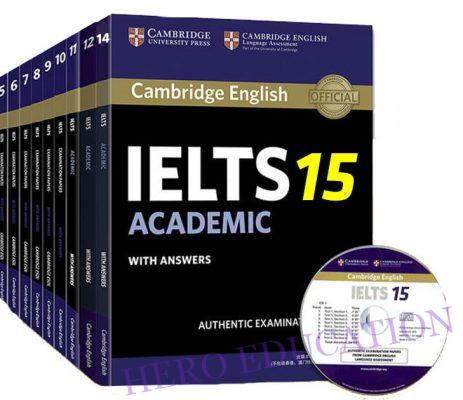
Ngoài ra, sử dụng các cuốn sách Cambridge là một lựa chọn thông minh để luyện thi IELTS vì các lý do sau đây:

Chất lượng đáng tin cậy:
  • Cambridge University Press là một trong những nhà xuất bản uy tín và danh tiếng nhất trên thế giới, nên các cuốn sách của họ có chất lượng rất đáng tin cậy và được biết đến với sự tinh tế trong việc giáo dục.
Cập nhật mới nhất:
  • Những cuốn sách mới nhất từ Cambridge được cập nhật theo chuẩn mới nhất của IELTS, đảm bảo rằng bạn sẽ có được các tài liệu luyện thi phù hợp với các yêu cầu hiện tại của kỳ thi IELTS.
Độ khó phù hợp:
  • Các đề thi trong các cuốn sách Cambridge được thiết kế để có độ khó phù hợp với từng cấp độ của kỳ thi IELTS, từ beginner đến advanced.
  • Vì vậy, bạn có được một trải nghiệm luyện thi toàn diện và phù hợp với trình độ của mình.
Chiến lược luyện thi:
  • Nhiều cuốn sách Cambridge đưa ra các chiến lược và kỹ thuật luyện thi IELTS hữu ích, giúp bạn hiểu rõ cấu trúc của kỳ thi, các bước để làm bài thi một cách hiệu quả và giải đáp những câu hỏi thường gặp của thí sinh.
Trang bị kiến thức phong phú:
  • Các cuốn sách từ Cambridge không chỉ giúp bạn nâng cao kỹ năng tiếng Anh, mà còn cung cấp cho bạn các kiến ​​thức chuyên sâu về nhiều lĩnh vực khác nhau, từ kinh tế đến khoa học xã hội, qua đó giúp bạn cải thiện khả năng đọc hiểu và viết bài theo đề bài.

Dưới đây là danh sách các cuốn sách Cambridge phù hợp với luyện thi IELTS:

9.0 ielts listening

  1. The Official Cambridge Guide to IELTS
  2. Cambridge IELTS series (1-16)
  3. Cambridge Grammar for IELTS with Answers
  4. Cambridge Vocabulary for IELTS with Answers
  5. Cambridge Skills for Fluency: Speaking and Listening (with audio CDs)

Xem thêm:

Khoá học IELTS tại HERO EDUCATION

Trung tâm Anh ngữ Hero Education – From Zero to Hero

IDIOM TRONG IELTS SPEAKING

idiom trong speaking

IDIOM LÀ GÌ?

Idioms – thành ngữ là các cụm từ hoặc một câu được cấu tạo từ nhiều từ nhưng không mang theo nghĩa đen.

Mỗi idioms đều có một ý nghĩa nhất định, thậm chí khác xa so với từ vựng gốc ban đầu.

Đây là cách diễn đạt bằng hình ảnh trong tiếng Anh mà người bản xứ hay sử dụng khi giao tiếp, giúp câu nói thêm thú vị và tự nhiên hơn.

IDIOM TRONG IELTS SPEAKING 

Trong kỳ thi IELTS Speaking, sử dụng idiom là một cách tuyệt vời để nâng cao điểm số của bạn.

  • Idiom là những cụm từ hoặc câu đặc biệt có ý nghĩa riêng biệt và thường không được hiểu theo nghĩa đen.
  • Sử dụng idiom trong bài nói IELTS Speaking giúp bạn trở nên tự tin hơn và thể hiện được vốn tiếng Anh của mình.

Tuy nhiên, việc sử dụng idiom cần phải cẩn thận.

  • Bạn không nên sử dụng quá nhiều idiom trong bài nói của mình, vì điều này có thể làm cho người nghe không hiểu được ý của bạn hoặc cảm thấy rối loạn.
  • Thay vào đó, hãy tập trung vào các idiom quan trọng và sử dụng chúng một cách chính xác và tự nhiên.

Để sử dụng idiom một cách hiệu quả trong bài nói IELTS Speaking, bạn nên

  • đọc và học thuộc một số idiom phổ biến, và tìm hiểu cách sử dụng chúng trong các tình huống khác nhau.
  • Hãy tập luyện sử dụng idiom trong các bài tập luyện và các bài nói thực tế.
  • Ngoài ra, bạn cũng có thể học từ các bài nói của người bản ngữ để nâng cao vốn từ vựng của mình.

Cuối cùng, sử dụng idiom chỉ là một trong những yếu tố quan trọng để nâng cao điểm số trong kỳ thi IELTS Speaking.

  • Bạn cần phải có một phát âm chuẩn và sử dụng ngữ pháp đúng để trở thành một bài nói hoàn hảo.
  • Hãy luyện tập chăm chỉ và tự tin vào khả năng của mình.
idiom trong ielts speaking

Các idiom thường được sử dụng trong IELTS Speaking gồm:

1.A blessing in disguise: một điều tốt đẹp ở phía sau những điều xấu xa,

    • Losing my job turned out to be a blessing in disguise because it gave me time to start my own business.

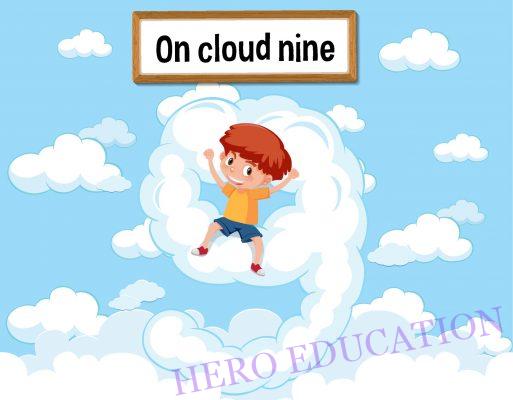
2. On cloud nine: rất hạnh phúc,

    • When I got accepted into my dream university, I was on cloud nine.

3. Hit the nail on the head: nói chính xác,

    • My teacher hit the nail on the head when she said that I needed to study more.

4. Break a leg: chúc may mắn (thường được nói trước khi biểu diễn),

    • Before my play, my friend told me to break a leg.

5. Piece of cake: dễ như ăn bánh,

    • The exam was a piece of cake for me because I had studied so hard.

6. Cost an arm and a leg: rất đắt đỏ,

    • Buying a new car can cost an arm and a leg.

7. In hot water: gặp khó khăn hoặc vấn đề,

    • I’m in hot water with my boss because I forgot to complete an important task.

8. Let the cat out of the bag: tiết lộ bí mật,

    • My sister let the cat out of the bag and told my parents about my surprise birthday party.

9. Keep your chin up: không nản chí,

    • Although I failed my driving test, I still keep my chin up and try again.

10. A picture is worth a thousand words: một hình ảnh bằng nghìn lời nói,

    • The photo of the sunset was so beautiful that it was truly a picture worth a thousand words.


Xem thêm:

 Các khoá học tại IELTS tại HERO EDUCATION

Trung tâm Anh ngữ Hero Education – From Zero to Hero

Transcript Cambridge IELTS 16 Test 1

CAMBRIDGE IELTS 16

Dưới đây là bài Transcript Cambridge IELTS 16 Test 1, các bạn đọc transcript để được hiểu rõ hơn, nghe rõ hơn những từ không thể nghe được và liên kết với câu hỏi để ra đáp án hợp lý nhất.

PART 1

SARAH:     Hello. Children’s Engineering Workshops.

FATHER:    Oh hello. I wanted some information about the workshops in the school holidays.

SARAH:     Sure.

FATHER:     I have two daughters who are interested. The younger one’s Lydia, she’s four – do you take children as young as that?

SARAH:     Yes, our Tiny Engineers workshop is for four to five-year-olds.

FATHER:     What sorts of activities do they do?

SARAH:     All sorts. For example, they work together to design a special cover that goes round an egg (Q1), so that when it’s inside they can drop it from a height and it doesn’t break. Well, sometimes it does break but that’s part of the fun!

FATHER:     Right. And Lydia loves building things. Is there any opportunity for her to do that?

SARAH:     Well, they have a competition to see who can make the highest tower (Q2). You’d be amazed how high they can go.

FATHER:     Right.

SARAH:     But they’re learning all the time as well as having fun. For example, one thing they do is to design and build a car (Q3) that’s attached to a balloon, and the force of the air in that actually powers the car and makes it move along. They go really fast too.

FATHER:     OK, well, all this sounds perfect.

————————–

FATHER:     Now Carly, that’s my older daughter, has just had her seventh birthday, so presumably she’d be in a different group?

SARAH:     Yes, she’d be in the Junior Engineers. That’s for children from six to eight.

FATHER:     And do they do the same sorts of activities?

SARAH:     Some are the same, but a bit more advanced. So they work out how to build model vehicles, things like cars and trucks, but also how to construct animals (Q4) using the same sorts of material and technique, and then they learn how they can program them and make them move.

FATHER:     So they learn a bit of coding?

SARAH:     They do. They pick it up really quickly. We’re there to help if they need it, but they learn from one another too.

FATHER:     Right. And do they have competition too?

SARAH:     Yes, with the Junior Engineers, it’s to use recycled materials like card and wood to build a bridge (Q5), and the longest one gets a prize.

FATHER:     That sounds fun. I wouldn’t mind doing that myself!

SARAH:     Then they have something a bit different, which is to think up an idea for a five-minute movie (Q6) and then film it, using special animation software. You’d be amazed what they come up with.

FATHER:     And of course, that’s something they can put on their phone and take home to show all their friends.

SARAH:     Exactly. And then they also build a robot in the shape of a human, and they decorate (Q7) it and program it so that it can move its arms and legs.

FATHER:     Perfect. So, is it the same price as the Tiny Engineers?

SARAH:     It’s just a bit more: £50 for the five weeks.

FATHER:     And are the classes on a Monday, too?

SARAH:     They used to be, but we found it didn’t give our staff enough time to clear up after the first workshop, so we moved them to Wednesdays (Q8). The classes are held in the morning from ten to eleven.

FATHER:     OK. That’s better for me actually. And what about the location? Where exactly are the workshops held?

SARAH:     They’re in building 10A – there’s a big sign on the door, you can’t miss it, and that’s in Fradstone (Q9) Industrial Estate.

FATHER:     Sorry?

SARAH:     Fradstone – that’s F-R-A-D-S-T-O-N-E.

FATHER:     And that’s in Grasford, isn’t it?

SARAH:     Yes, up past the station.

FATHER:     And will I have any parking (Q10) problems there?

SARAH:     No, there’s always plenty available. So would you like to enrol Lydia and Carly now?

FATHER:     OK.

SARAH:     So can I have your full name …

PART 2

Good morning, everyone, and welcome to Stevenson’s, one of the country’s major manufacturers of metal goods. Thank you for choosing us for your two weeks of work experience. My name is Julia Simmons, and since the beginning of this year I’ve been the managing director.

Stevenson’s is quite an old company. Like me, the founder, Ronald Stevenson, went into the steel industry when he left school – that was in 1923. He set up this company when he finished his apprenticeship, in 1926 (Q11), although he actually started making plans two years earlier, in 1924. He was a very determined young man!

Stevenson’s long-term plan was to manufacture components for the machine tools industry – although in fact that never came about – and for the automotive industry, that is, cars and lorries. However, there was a delay of five years before that happened, because shortly before the company went into production, Stevenson was given the opportunity to make goods for hospitals and other players in the healthcare industry, so that’s what we did for the first five years (Q12).

Over the years, we’ve expanded the premises considerably – we were lucky that the site is big enough, so moving to a new location has never been necessary (Q13). However, the layout is far from ideal for modern machinery and production methods, so we intend to carry out major refurbishment of this site (Q13) over the next five years.

I’d better give you some idea of what you’ll be doing during your two weeks with us, so you know what to expect. Most mornings you’ll have a presentation from one of the managers (Q14), to learn about their department, starting this morning with research and development. And you’ll all spend some time in each department, observing what’s going on and talking to people – as long as you don’t stop them from doing their work altogether! In the past, a teacher from your school has come in at the end of each week to find out how the group were getting on, but your school isn’t able to arrange that this year.

————————-
CAMBRIDGE IELTS 16

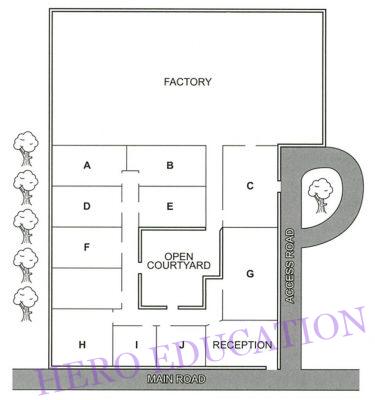
OK, now I’ll briefly help you to orientate yourselves around the site. As you can see, we’re in the reception area, which we try to make attractive and welcoming to visitors. There’s a corridor running left from here, and if you go along that, the door facing you at the end is the entrance to the coffee room. This looks out onto the main road on one side, and some trees on the other (Q15), and that’ll be where you meet each morning.

The factory is the very big room on the far side of the site. Next to it is the warehouse, which can be accessed by lorries going up the road to the turning area at the end. You can get to the warehouse by crossing to the far side of the courtyard, and then the door is on your right (Q16).

Somewhere you’ll be keen to find is the staff canteen. This is right next to reception (Q17). I can confidently say that the food’s very good, but the view isn’t. The windows on one side look onto a corridor and courtyard, which aren’t very attractive at all, and on the other onto the access road, which isn’t much better.

You’ll be using the meeting room quite often, and you’ll find it by walking along the corridor to the left of the courtyard, and continuing along it to the end. The meeting room is the last one on the right (Q18), and I’m afraid there’s no natural daylight in the room.

Then you’ll need to know where some of the offices are. The human resources department is all the front of this building, so you head to the left along the corridor from reception, and it’s the second room you come to. It looks out onto the main road (Q19).

And finally, the boardroom (Q20), where you’ll be meeting sometimes. That has quite a pleasant view, as it looks out on to the trees. Go along the corridor past the courtyard, right to the end. The boardroom is on the left, next to the factory.

OK, now are there any questions before we …

PART 3

JESS:     How are you getting on with your art project, Tom?

TOM:     OK. Like, they gave us the theme of birds to base our project on, and I’m not really all that interested in wildlife. But I’m starting to get into it. I’ve pretty well finished the introductory stage.

JESS:     So have I. When they gave us all those handouts with details of books and websites to look at (Q21/Q22), I was really put off, but the more I read, the more interested I got.

TOM:     Me too. I found I could research so many different aspects of birds in art – colour, movement, texture. So I was looking forward to the Bird Park visit.

JESS:     What a letdown! It poured with rain and we hardly saw a single bird. Much less use than the trip to the Natural History Museum (Q21/Q22).

TOM:     Yeah, I liked all the stuff about evolution there. The workshop sessions with Dr Fletcher were good too, especially the brainstorming sessions.

JESS:     I missed those because I was ill. I wish we could’ve seen the projects last year’s students did.

TOM:     Mm. I suppose they want us to do our own thing, not copy.

JESS:     Have you drafted your proposal yet?

TOM:     Yes, but I haven’t handed it in. I need to amend some parts. I’ve realised the notes from my research are almost all just descriptions, I haven’t actually evaluated anything. So I’ll have to fix that (Q23/Q24).

JESS:     Oh, I didn’t know we had to do that. I’ll have to look at that too. Did you do a timeline for the project?

TOM:     Yes, and a mind map.

JESS:     Yeah, so did I. I quite enjoyed that. But it was hard having to explain the basis for my decisions in my action plan.

TOM:     What?

JESS:     You know, give a rationale.

TOM:     I didn’t realise we had to do that. OK, I can add it now. And I’ve done the video diary presentation, and worked out what I want my outcome to be in the project.

JESS:     Someone told me it’s best not to be too precise about your actual outcome (Q23/Q24) at this stage, so you have more scope to explore your ideas later on. So I’m going to do back to my proposal to make it a bit more vague.

TOM:     Really? OK, I’ll change that too then.

——————————

TOM:     One part of the project, I’m unsure about is where we choose some paintings of birds and say what they mean to us. Like, I chose a painting of a falcon by Landseer. I like it because the bird’s standing there with his head turned to one side, but he seems to be staring straight at you. But I can’t just say it’s a bit scary, can I?

JESS:     You could talk about the possible danger suggested by the bird’s look (Q25).

TOM:     Oh, OK.

JESS:     There’s a picture of a fish hawk by Audubon I like. It’s swooping over the water with a fish in its talons, and with great black wings which take up most of the picture.

TOM:     So you could discuss it in relation to predators and food chains?

JESS:     Well actually I think I’ll concentrate on the impression of rapid motion it gives. (Q26)

TOM:     Right.

JESS:     Do you know that picture of a kingfisher by van Gosh – it’s perching on a reed growing near a stream.

TOM:     Yes, it’s got these beautiful blue and red and black shades.

JESS:     Mm hm. I’ve actually chosen it because I saw a real kingfisher once when I was litter, I was out walking with my grandfather (Q27), and I’ve never forgotten it.

TOM:     So we can use a personal link?

JESS:     Sure.

TOM:     OK. There’s a portrait called William Wells. I can’t remember the artist but it’s a middle-aged man who’s just shot a bird. And his expression, and the way he’s holding the bird in his hand suggests he’s not sure about what he’s done. To me it’s about how ambiguous people are in the way they exploit the natural world. (Q28)

JESS:     Interesting. There’s Gauguin’s picture Vairumati. He did it in Tahiti. It’s a woman with a white bird behind her that is eating a lizard, and what I’m interested in is what idea this bird refers to. Apparently, it’s a reference to the never-ending cycle of existence. (Q29)

TOM:     Wow. I chose a portrait of a little boy, Giovanni de Medici. He’s holding a tiny bird in one fist (Q30). I like the way he’s holding it carefully so he doesn’t hurt it.

JESS:     Ah right.

PART 4

Ancient philosophy is not just about talking or lecturing, or even reading long, dense books. In fact, it is something people have used throughout history – to solve their problems and to achieve their greatest triumphs.

Specifically, I am referring to Stoicism, which, in my opinion, is the most practical of all philosophies (Q31) and therefore the most appealing. Stoicism was founded in Ancient Greece by Zeno of Citium in the early 3rd century BC, but was practised by the likes of Epictetus, Cato.

Seneca and Marcus Aurelius. Amazingly, we still have access to these ideas, despite the fact that the most famous Stoics never wrote anything down for publication (Q32).

Cato definitely didn’t. Marcus Aurelius never intended his Meditations to be anything but personal. Seneca’s letters were, well, letters and Epictetus’ thoughts come to us by way of a note-taking student.

Stoic principles were based on the idea that its followers could have an unshakable happiness in this life and the key to achieving this was virtue.

The road to virtue, in turn, lay in understanding that destructive emotions, like anger and jealousy, are under our conscious control – they don’t have to control us, because we can learn to control them.

In the words of Epictetus: “external events I cannot control, but the choices I make with regard to them, I do control”. (Q33)

The modern day philosopher and writer Nassim Nicholas Taleb defines a Stoic as someone who has a different perspective on experience which most of us would see as wholly negative (Q34); a Stoic “transforms fear into caution, pain into transformation, mistakes into initiation and desire into undertaking”.

Using this definition as a model, we can see that throughout the centuries Stoicism has been practised in more recent history by kings, presidents, artists, writers and entrepreneurs.

———————

The founding fathers of the United States were inspired by the philosophy. George Washington was introduced to Stoicism by his neighbours at age seventeen, and later, put on a play based on the life of Cato to inspire his men (Q35). Thomas Jefferson kept a copy of Seneca beside his bed.

Writers and artists have also been inspired by the stoics. Eugène Delacroix, the renowned French Romantic artist (known best for his painting Liberty Leading the People) was an ardent Stoic, referring to it as his “consoling religion”.

The economist Adam Smith’s theories on capitalism were significantly influenced by the Stoicism (Q36) that he studied as a schoolboy, under a teacher who had translated Marcus Aurelius’ works.

Today’s political leaders are no different, with many finding their inspiration from the ancient texts. Former US president Bill Clinton rereads Marcus Aurelius every single year, and many have compared former President Obama’s calm leadership style to that of Cato. Wen Jiabao, the former prime minister of China, claims that Meditations is one of two books he travels with and that he has read it more than one hundred times over the course of his life.

Stoicism had a profound influence on Albert Ellis, who invented Cognitive Behaviour Therapy (Q37), which is used to help people manage their problems by changing the way that they think and behave. It’s most commonly used to treat depression. The idea is that we can take control of our lives by challenging the irrational belief that create our faulty thinking, symptoms and behaviours by using logic instead. (Q38)

Stoicism has also become popular in the world of business. Stoic principles can build the resilience and state of mind required to overcome setbacks because Stoics teach turning obstacles into opportunity (Q39). A lesson every business entrepreneur needs to learn.

I would argue that study Stoicism is as relevant today as it was 2,000 years ago, thanks to its brilliant insights into how to lead a good life (Q40). At the very root of the thinking, there is a very simple way of living – control what you can and accept what you can’t. This is not as easy as it sounds and will require considerable practice – it can take a lifetime to master. The Stoics also believed the most important foundation for a good and happy life is not money, fame, power or pleasure, but having a disciplined and principled character – something which seems to resonate with many people today.


Xem thêm:

Trung tâm Anh ngữ Hero Education – From Zero to Hero

Cambridge IELTS 16 – Listening Test 1

CAMBRIDGE IELTS 16

Khi thi IELTS, việc luyện các bộ đề Cambridge là không thể thiếu trong quá trình học tập IELTS. Và dưới đây là tài liệu, đáp án và giải thích Cambridge IELTS 16 – Listening test 1.

CAMBRIDGE IELTS 16 LISTENING TEST 

PART 1

Questions 1 – 10

Complete the notes below.

Write ONE WORD AND/OR A NUMBER for each answer.

Children’s Engineering Workshops

Tiny Engineers (ages 4-5)

Activities

●   Create a cover for an 1 ………………… so they can drop it from a height without breaking it.

●   Take part in a competition to build the tallest 2 ………………… .

●   Make a 3 ………………… powered by a balloon.

Junior Engineers (ages 6-8)

Activities:

●   Build model cars, trucks and 4 ………………… and learn how to program them so they can move.

●   Take part in a competition to build the longest 5 ………………… using card and wood.

●   Create a short 6 ………………… with special software.

●   Build, 7 ………………… and program a humanoid robot.

Cost for a five-week block: £50

Held on 8 ………………… from 10 am to 11 am

Location

Building 10A, 9 ………………… Industrial Estate, Grasford

Plenty of 10 ………………… is available.

PART 2

Questions 11 – 14

Choose the correct letter, A, B or C.

11   Stevenson’s was founded in

A   1923.

B   1924.

C   1926.

12   Originally, Stevenson’s manufactured goods for

A   the healthcare industry.

B   the automotive industry.

C   the machine tools industry.

13   What does the speaker say about the company premises?

A   The company has recently moved.

B   The company has no plans to move.

C   The company is going to move shortly.

14   The programme for the work experience group includes

A   time to do research.

B   meetings with a teacher.

C   talks by staff.

Questions 15-20

Label the map below.

Write the correct letter, A-J, next to Questions 15-20.

Plan of Stevenson’s site

CAMBRIDGE IELTS 16

15   coffee room               …………….

16   warehouse                 …………….

17   staff canteen             …………….

18   meeting room           …………….

19   human resources     …………….

20   boardroom                 …………….

PART 3

Questions 21 and 22
Choose TWO letters, A-E.

Which TWO parts of the introductory stage to their art projects do Jess and Tom agree were useful?

A   the Bird Park visit

B   the workshop sessions

C   the Natural History Museum visit

D   the projects done in previous years

E   the handouts with research sources

Questions 23 and 24
Choose TWO letters, A-E.

In which TWO ways do both Jess and Tom decide to change their proposals?

A   by giving a rationale for their action plans

B   by being less specific about the outcome

C   by adding a video diary presentation

D   by providing a timeline and a mind map

E   by making their notes more evaluative

Questions 25-30
Which personal meaning do the students decide to give to each of the following pictures?
Choose SIX answers from the box and write the correct letter, A-H, next to Questions 25-30.
Personal meanings

A   a childhood memory

B   hope for the future

C   fast movement

D   a potential threat

E   the power of colour

F   the continuity of life

G   protection of nature

H   a confused attitude to nature

Pictures

25   Falcon (Landseer)                                   …………….

26   Fish hawk (Audubon)                             …………….

27   Kingfisher (van Gogh)                            …………….

28   Portrait of William Wells                      …………….

29   Vairumati (Gauguin)                              …………….

30   Portrait of Giovanni de Medici            …………….

PART 4

Questions 31 – 40

Complete the notes below.

Write ONE WORD ONLY for each answer.

Stoicism

Stoicism is still relevant today because of its 31 ………………… appeal.

Ancient Stoics

Stoicism was founded over 2,000 years ago in Greece.

The Stoics’ ideas are surprisingly well known, despite not being intended for 32 …………………

Stoic principles

Happiness could be achieved by leading a virtuous life.

Controlling emotions was essential.

Epictetus said that external events cannot be controlled but the 33 ………………… people make in response can be controlled.

A Stoic is someone who has a different view on experiences which others would consider as 34 ………………… .

The influence of Stoicism

George Washington organised a 35 ………………… about Cato to motivate his men.

The French artist Delacroix was a Stoic.

Adam Smith’s ideas on 36 ………………… were influenced by Stoicism.

Some of today’s political leaders are inspired by the Stoics.

Cognitive Behaviour Therapy (CBT)

–  the treatment for 37 ………………… is based on ideas from Stoicism

–  people learn to base their thinking on 38 ………………… .

In business, people benefit from Stoicism by identifying obstacles as 39 ………………… .

Relevance of Stoicism

It requires a lot of 40 ………………… but Stoicism can help people to lead a good life.

It teaches people that having a strong character is more important than anything else.

BÀI TẬP PART 2 TOEIC

Part 2 TOEIC là một trong những dạng bài mà thí sinh có thể thấy thích thú vì dễ dàng đạt điểm chỉ cần nghe KEYWORDS là đoán được kết quả, nhưng đôi khi các bạn nên luyện bài tập toeic part 2 nhiều vì có những dạng câu bẫy hoặc các câu xu hướng về từ vựng làm khó chúng ta.

BÀI TẬP TOEIC PART 2

Part 2

Directions: You will hear a question or statement and three responses spoken in English. They will not be printed in your test book and will be spoken only one time. Select the best response to the question or statement and mark the letter (A), (B), or (C) on your answer sheet.

bài tập toeic part 2

ĐÁP ÁN BÀI TẬP TOEIC PART 2

QUESTION FROM 7 TO 18

7. When does the shop close?
(A) Yes, at the workshop.
(B) No, they’re new clothes.
(C) At nine o’clock tonight.
8. Who’s scheduled to clean the kitchen?
(A) By the sink.
(B) Yes, every day.
(C) Jack is.
9. How will we get to the hotel from the airport?
(A) We’ll take a taxi.
(B) About 45 minutes.
(C) Will that be everything?

10. Is Teresa out of the office today?

(A) Those tickets are sold out.

(B) No-she’s just gone to lunch.

(C) I completed that yesterday.

11. Which food supplier do you use?

(A) In the vegetable aisle.
(B) On a weekly basis.
(C) We use E and G Food Company.
12. Could you help me set up this window display?
(A) A window seat.
(B) Yes, I was in a play.
(C) I’d be happy to.
13. Why is this package here?
(A) Three dollars and fifty cents.
(B) I’ll carry it upstairs.
(C) An online retailer.
14. Which menu item do you recommend?
(A) I’d suggest the pasta.
(B) Do you have this shirt in blue?
(C) No, I’m fine, thank you.
15. Do you know who requested technical support?
(A) Sorry, I just got into the office.
(B) The sports team is doing well.
(C) Two years of technical school.
16. Where does Takumi keep the ink cartridges for the printer?
(A) Yes, that’d be great.
(B) To get it replaced.
(C) In the supply room.
17. Ali is going to Jessica’s retirement party, isn’t he?
(A) I don’t think they worked together.
(B) Brand new tires.
(C) No thanks, I already ate.
18. Why don’t you go to the trade show with Franklin and Jane?
(A) No, I didn’t see it.
(B) Because I have a major report to finalize that week.
(C) Usually in San Francisco.

QUESTION 19 – 31

19. When are we ordering more gloves for the laboratory?
(A) The latest test results.
(B) It’s close to the post office.
(C) We’ve got extras in the cabinet.
20. Doesn’t this movie theater seat 500 people?
(A) Tickets are fifteen dollars.
(B) Not quite that many, no.
(C) We should be finished soon.
21.Would you like to make an appointment with the nutritionist?
(A) A client luncheon.
(B) I’m scheduled for the fourteenth.
(C) The fruit is on the table.
22. Did you know that the Vienna Orchestra’s giving a concert here soon?
(A) No-where will it be?
(B) Classical literature.
(C) The opening piece was great.
23. What’s the marketing department working on?
(A) I’m on the accounting team.
(B) That was a good commercial.
(C) To the second floor.
24. Isn’t it hot in here?
(A) A hat and scarf.
(B) For a quick phone call.
(C) The air conditioner’s behind me.
25. Do you want to drive to the convention center, or would you like me to?
(A) That’s all we needed.
(B) The first entrance on the left.
(C) I can drive since you did last time.
26. Could you pick up some more paper for the printer?
(A) Alan said that he would.
(B) No, I haven’t seen it.
(C) A technician
27. I’m about to order lunch now if you’re hungry.
(A) Next to the telephone.
(B) Bus number five.
(C) Can I see the menu?
28. Where’s the camera on this computer?
(A) No, I don’t think so.
(B) E-mail it by tomorrow, please.
(C) On the top edge of the monitor.
29. The conference is Helsinki this year, isn’t it?
(A) Here’s the itinerary.
(B) About 5,000 participants.
(C) I was supposed to call him.

30. Should I schedule the inspection for Monday or Wednesday?

(A) Yes, I’ll have a few.

(B) Mondays are less busy.

(C) Please inspect these boxes.

31. Let’s talk about how the business trip went.

(A) We have a client meeting right now.

(B) The travel agency.

(C) I saw it last week.

XEM THÊM:

Các khoá học TOEIC tại HERO EDUCATION

Vui lòng liên hệ với Trung Tâm Anh Ngữ Hero Education qua số điện thoại 028.3846.7777 – 0937.123.777 (Zalo, Viber, Whatsapp) để được tư vấn và hỗ trợ.

🎓Trung tâm Anh ngữ Hero Education
From Zero to Hero
Địa chỉ : 219A Nơ Trang Long, phường 12, quận Bình Thạnh
🌐Website: www.hero.edu.vn
☎️Hotline: 0937.123.777 (Zalo, Viber, Whatsapp)
✉️Email: info@hero.edu.vn